
Consider Performing Arts Programming
Demographics vs. Silos vs. Art

In 1979 on a school trip to Broadway, my young teenage self sat in the Uris Theater, not knowing anything about what was to take place before me. The house went dark, a solo organist began to play an ominous intro and then a shriek, no, an almost human scream of a factory whistle riveted everyone’s attention to the stage.
Suddenly, all in my row felt their eyes grow wider. What is happening?
A Londoner began to sing:
Attend the tale of Sweeney Todd
His skin was pale and his eye was odd
He shaved the faces of gentlemen
Who never thereafter were heard of again
I attended the tale of Sweeny Todd, The Demon Barber of Fleet Street, the original production of Stephen Sondheim's masterpiece and I knew I was witnessing something incredibly rare. The music, the lyrics, the outrageous storyline, the love songs, and vengeance personified.
There were so many emotions, the sets, the precision of the orchestra in the pit, the costumes, the humor of a mass murdering duo. At the time I didn’t know exactly how to take it all in, but I knew it was amazing.
I have attended the tale over several different adaptations of the show through the years… all of them fresh takes on the original. All fantastic in their own way.
Some years later, while in college I was playing lead trumpet in the pit orchestra for the theater department’s production of Merrily We Roll Along, Sondheim's legendary Broadway flop. I loved it. People love it today.
I didn’t know it back then, but that performance started what would become a lifelong love of Sondheim's work. I have since seen and enjoyed all of his musicals.
The question is, was a young teenage boy from the middle class suburbs who had never seen a Broadway show before the intended audience demographic? Not a chance.
However, it certainly connected with me and sparked my attachment to Sondheim’s work and his art creation process. - Michael DeMarco
Arts Programming, A Piece of Cake
Connecting an audience to art sounds like a pretty easy endeavor.
Put it on stage and people will come. If they don’t come, next time, lower the price. Or maybe, stage it in the park and make it free. Then for sure people will come. Wrong.
Or…people will like it because the very trend setting director likes it. The esteemed conductor knows best. The innovative arts programmer knows what works. I say, not necessarily.
I have witnessed these erroneous programming theories many times. One would think, Hamilton, the 11 time Tony Award winning musical, is probably best suited for an urban audience who loves rap, hip-hop and a little bit of history.
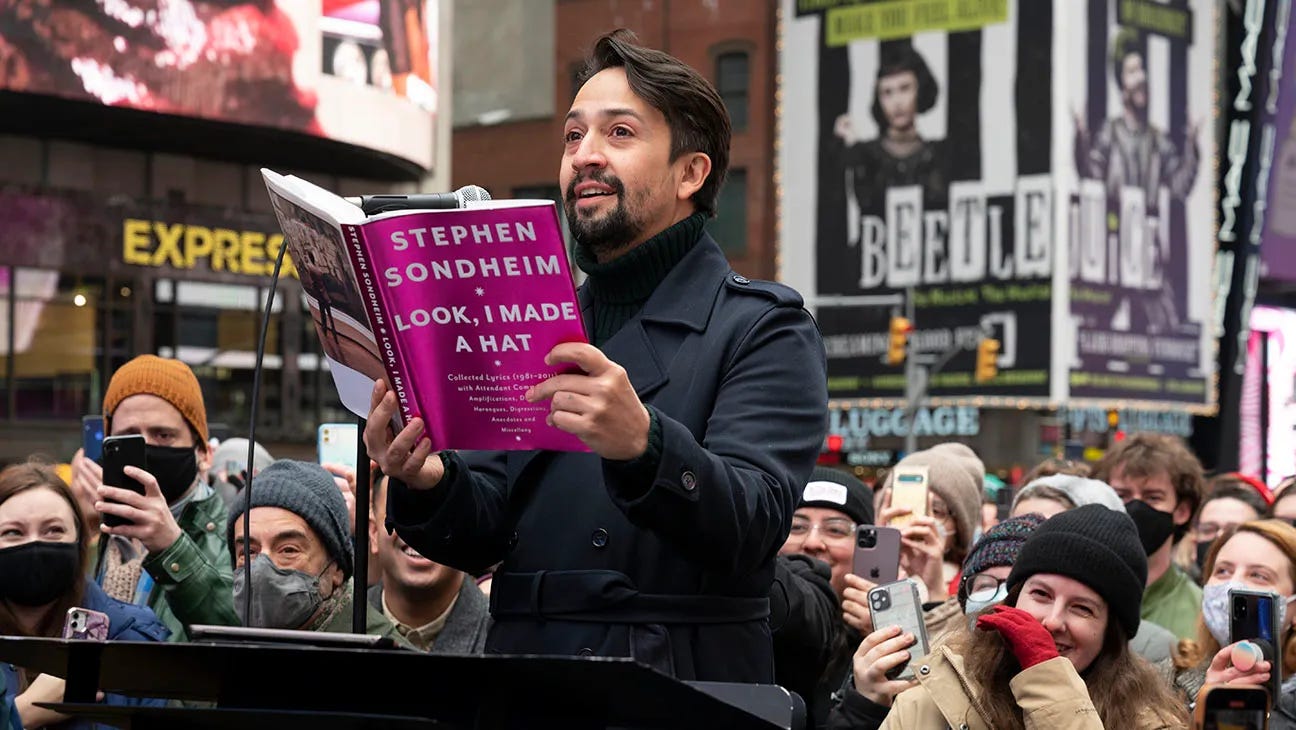
Lin-Manuel Miranda met Sondheim when he was tapped to help add Spanish translations to a new Broadway revival of West Side Story. Sondheim was one of the first he told about his plan to write a musical based upon Alexander Hamilton back in 2008. He sent Sondheim early drafts of songs over the seven-year development of what would become Hamilton and he always credits Sondheim’s encouragement.
As Lin-Manuel Miranda, its creator states:
“Hamilton on Disney+ made the hip-hop musical more accessible to diverse audience members who couldn't physically or financially make their way to the theater. The fact that Hamilton is the first successful hip-hop musical and hip-hop is 40 years old tells you everything you need to know about how late change comes to the very siloed, very white world of theater.”
But, Hamilton did become a one billion dollar franchise and the first hip-hop Broadway musical made it out of the silo and into the mainstream. Sometimes art and audiences need to evolve.
Not every musical, symphonic work, or opera is an immediate success. Verdi, Puccini and Sondheim can tell you about their disappointments with initial shortfalls of public acclaim. Hip-hop may be 40 years old, but only in 2017 did hip-hop become the most consumed genre of music in the US. Hamilton debuted in 2015.
There are only four musicals that have made it to the billion dollar franchise mark and Hamilton made it there in 5 years, much faster than the other three.

I believe programming in the arts needs to be channeled toward creating great art first. Great art transcends predictable community demographics. Demographics may play a necessary role in how to spend money in the marketing of the program but not the selection of the program.
Great Art Transcends All
Demographic Stats are for Marketing, not Programming
Demographic descriptors such as age, sex, race and socio-economic segmentations of the population are all important criteria to help define the target audience in order to focus your marketing dollars, however, programming, in my opinion, should transcend the community’s demographics.
My grandfather, an Italian immigrant, came to America and certainly connected to his roots by attending the operas of Verdi, Donizetti and Puccini at the “Old Met” in New York. I know he brought my mother as a teenager. Now, I bring my mother at age eighty-five to The Met at Lincoln Center.
Yes, understanding demographics is important when marketing a Harry Potter’s soundtrack concert by the local symphony. However, I believe programming needs to have high standards first and not just match programming to the community it serves.
How else will communities climb out of the silo which Miranda dislikes?
Arts programmers must be cognizant of their community’s demographics, but produce more than just what programmers perceive the community likes.
A Sales Perception Story
I have run a few sales departments in my talent agenting career. Perception of community demographics is more complicated than believed at first glance.
An old sales adage I enjoy retelling is of the two shoe manufacturers that many years ago sent their top salespersons to sub-Saharan Africa to see if they can open a new market for selling shoes to the tribes people.
One salesperson wired back, “No opportunity, no one wears shoes here” the other said, “This is amazing, there are millions of people here and no one has any shoes! Start sending boat loads here immediately!”
Educate to Recognize and Seek Great Art
Education and outreach is a vital component in creating new and loyal audiences for performing arts organizations. I have been there. I sometimes feel lonely as the only person and sole experienced voice initiating friends and acquaintances to try their first opera.
I explain that no one likes all opera, just as no one likes all movies.
But generally if you like love stories, you will like Puccini, and if you like fantasy and science fiction, you will like Wagner. I have seen many people go and return to the opera from my encouragement.
I have used all tools available to me, even sending them links to the podcast Opera Code with each episode dedicated to one famous aria and the Metropolitan Opera hosts then “decode” it for the listener.
Arts programmers need to first concentrate on creating great art. Educating their audience to seek great art and not just program art that the community’s demographics dictate. Plenty of people loved Hamilton that are not regular listeners to Hip-Hop.
Great art and true talent on stage transcends all.