
Beyond The Booking: Your Fanbase Is Mimetic
And So Should Be Your Music Marketing

Music fans are always making choices.
What should I listen to?
What genre of music, artist or song?
Am I a fan of EDM, Pop, Hip-Hop or Indie Rock?
Still, questions on a deeper level, what makes me choose to be a fan of a particular artist?
How do I discover a new artist and what causes me to like and follow them?
Many people believe they make these choices completely on their own as if they are on a deserted island listening to a vast collection of songs, selecting some and casting away others.
However, these choices and especially the choice to be a loyal fan and follow a particular artist, buy their merchandise and attend their concerts, are in fact part of a model of desire.
Those responsible for releasing new music, for example record labels, take chances on many new artists every year knowing that only a comparative few will break through to have a successful career. With large marketing budgets, savvy communication skills and connections, many very talented artists never rise to profitability or fame.
Some in marketing roles admit there is a bit of a mystery as to why some talented artists never “make it” while others, maybe not as talented rise to stardom, and some quite quickly.
For those that understand the Mimetic Theory of Desire set forth by the historian and philosopher René Girard, this is not a mystery.
That’s a bold statement. The explanation follows.
This piece is part of my Beyond the Booking series of Keeping Score
Mastery leaves clues. Music reveals them.
Keeping Score is designed to decode those clues and give you tools you can use in your own life and work.

The Theory of Mimetic Desire
First a little philosophy.
René Girard was a French philosopher of social science and professor of history and literature at Stanford University for nearly thirty years. Girard’s discovery of the Theory of Mimetic Desire is based upon one’s understanding of one’s own past, how your identity has been shaped and why certain people and things have exerted more influence over you than others. Essentially, this is how one’s desires are formed.
Desire, as Girard explains, does not mean the innate drive for shelter, food, or sex. These are better called needs. If one is dying of thirst crossing a desert, one does not need anyone to show that a glass of water is desirable. However, humans have desires beyond their needs. Girard was interested in how we come to want the things we desire. His theory describes desire as the most salient feature of the human condition and imitation as the most fundamental of all human behavior.
You are mimetic, all humans are. Mimesis comes from the Greek word mīmeisthai, “to imitate”. Mimetic Theory is a theory that explains human desire, and ultimately human behavior, with a very simple and very paradigm breaking observation: desire may feel like it comes from some objective place deep inside of us, but that is actually not true.
We desire what we desire because we are imitating someone else who desired it first. The Theory of Mimetic Desire explains that humans, once their basic needs are met, form choices based not upon original thought but by modeling the desires and behaviors of others.
Peter Thiel, billionaire cofounder of PayPal, was a student and follower of Girard during his time at Stanford. Thiel freely explains why he became the first outside investor in Facebook as he believed the platform was rooted in mimetic theory.
Facebook, as now all social media platforms, employ algorithms to serve up models of desire to users in a continuous flow. Thiel realized that in the past, available models of desire were derived from a relatively small group. They were family members and friends, co-workers, mentors and a few celebrities that one admired. With the addition of the wider global access which social media provides, users have vastly more methods to find models to form their desires. These models are there to influence desire, those that are models of desire for thousands of people are generally and correctly termed influencers.
The Theory of Mimetic Desire is a foundational idea that human desires, beyond basic needs, are not individual but actually collective, or social. Humans are imitative. Our desires are modeled, many times unconsciously and sometimes consciously, on what we see and perceive others want or desire.
The advertising and fashion industries have known this for decades. The creative agencies behind Super Bowl commercials don’t simply show us the things they want us to buy.
They almost always show us other people wanting the things they want us to buy.
Celebrity endorsements are one of the most prevalent examples of offering a model of desire for viewers to adopt.
People are the key, yet it’s all very familiar. For many decades an anonymous cowboy was the model for smokers to adopt Marlboro cigarettes.
Consider the people you see in television bank commercials offered up as a possibility for viewers to use as models of their desire. There is not a lot of banking going on in these commercials. There are however a lot of people hiking, cycling, scoring goals on various athletic fields and families making family dinners.
Imitation and Models
Once one understands the very human need to model their desires on other people, one can view mimetic modeling all around us.
Do many tech workers come to wear hoodies because they are convenient, warm and easy to wash?
Does the movement of the Bitcoin price, the run up of GameStop stock or holding up a cell phone flashlight during a concert come from imitation or original thought?
Imitative models tend to prevail.
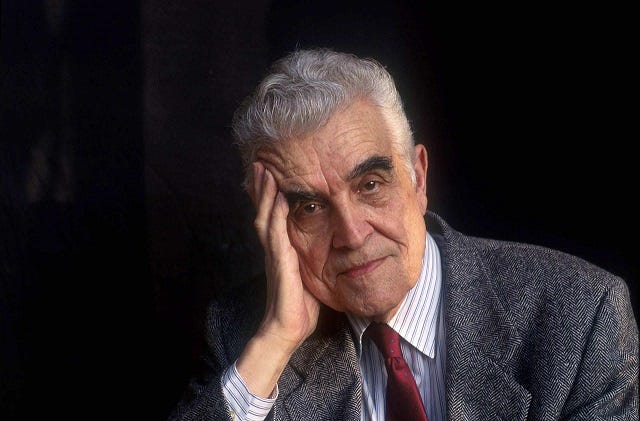
“The most mimetic institution of all is a capitalist institution: the stock market. You desire stock not because it is objectively desirable. You know nothing about it, but you desire stuff...because other people desire it. And if other people desire it, its value goes up and up.”
René Girard
Mimetic Theory and The Marketing of Music
The infamous Fyre Festival of 2017 proved how 5,000 people can sign up in anticipation of a luxury concert weekend after seeing their favorite models and influencers just post about it on social media.
If you are in the business of trying to acquire fans, creating a concert stage experience that fans will enjoy and tell their friends about or seek to write a commercially successful song, wouldn’t it be important to know what causes people’s desire to be fans? It’s not just about the music.
You may like the Beatles, but what does being a Beatles fan say about you?
Being a Swiftie or a Little Monster will say more about you than just being a fan of Taylor Swift or Lady Gaga.
When you share that you are a fan of an artist, it not only describes some traits about you, it also makes a model available to others you know, and if sharing on social media, others you don’t know. You are at once modeling another person’s desire and being an available model to others.
One would think that, at least in the beginning of their careers, Bon Jovi and Bruce Springsteen put forth a model of blue-collar rebellion. There were a lot of rebellious blue-collar music fans and many more people that found it appealing and modeled wholesome regular working-class fans too.
Spotify released Blend, their app for sharing playlists. It cannot be stated better than in their launch announcement that bonding with a friend or loved one over your favorite shared music creates a relationship like no other. Or maybe they could have said, “We are making it easier for you to model your friends and grow the fanbase of the artists they like.”
Fans become fans because they seek to model the desires of other fans. To reverse engineer your marketing, ask:
Are you mimetic as an artist?
Do your fans inspire other fans to model them?
How can my fans be a model to more people and how can I help make them more known so that more people will adopt their model? If I promote and showcase a fan, or series of fans am I then offering them as models for new fans? These are the questions music marketers should consider if they purposefully want their message to be more mimetic.
For the Skeptics
You may be reading this thinking you’re the exception, that your tastes are authentically yours, arrived at through independent discovery and careful discernment.
This resistance is itself predictable. Girard noted that the modern myth of radical individualism makes mimetic influence almost impossible to see in ourselves, even as we readily spot it in others.
We notice when teenagers dress alike (that Gen Z in a Nirvana t-shirt comes to mind) or when our neighbor buys the same car as their colleague, but our own desires feel spontaneous and original.
Consider this: can you trace the origin of your favorite artist back to a moment untouched by another person’s enthusiasm? A friend’s recommendation, a critic’s review, a crowd’s reaction, an algorithm trained on collective behavior?
The influence doesn’t diminish your enjoyment or make your fandom less real. It simply reveals how desire actually works.
The first step in leveraging mimetic dynamics for your marketing is accepting that you too, are subject to them.
Here’s The Takeaway
A strong understanding of mimetic desire reveals how desires are shaped and adopted for all music fans. People are models and fans are models for other fans. Creating models with mass appeal for mimetic fans to adopt is the key to growing a fanbase. For music marketers, communicating a message that is easily mimetic is the essence of growing a fanbase virally.
This article was inspired by a reading of the recently published book, Wanting: The Power Of Mimetic Desire In Everyday Life by Luke Burgis. For anyone seeking to create a mimetically informed music marketing approach and is seeking a more thorough and accessible discussion of Mimetic Theory, the book is a must read.
Michael DeMarco teaches Concert Tour Management in the live entertainment management master’s degree program at the University of Miami’s Frost School of Music.
For more than twenty-five years he has been the Founder and CEO of Celebrity Direct Inc, a talent agency booking and producing concerts nationwide. He studies philosophy of social science and behavioral economics as a hobby.
Being mimetic, he finds he has a propensity to wear polo shirts with crocodile insignias.
Sources:
1. “Stanford professor and eminent French theorist René Girard, member of the Académie Française, dies at 91”
https://news.stanford.edu/stories/2015/11/rene-girard-obit-110415.
2. Luke Burgis, Wanting: The Power Of Mimetic Desire In Everyday Life (New York: St.Martin's Press 2021)
3. “Desire Definition,” Mimetictheory.com, accessed Febraury13, 2021, https://mimetictheory.com/desire-definition/#_edn1.
4. Richard Feloni, “Peter Thiel Explains How an Esoteric Philosophy Book Shaped His Worldview,” Insider, November 2014, https://www.businessinsider.com/peter-thiel-on-rene-girards-influence-2014-11.
5. “What It Is” Mimetictheory.com
https://mimetictheory.com/mimetic-theory/.
6. Aaron Edelheit, “Mimetic Desire and Why Price Action Matters Wanting: My Nomination for Investing Book of the Year,” Substack. mindsetvalue.substack.com/p/mimetic-desire-and-why-price-action.
7. “The Fyre Festival and Violent Mimesis,” Mimetictheory.com https://mimetictheory.com/articles/the-fyre-festival/.
8. “How Spotify’s Newest Personalized Experience, Blend, Creates a Playlist for You and Your Bestie,” Spotify.com, For The Record.
https://newsroom.spotify.com/2021-08-31/how-spotifys-newest-personalized-experience-blend-creates-a-playlist-for-you-and-your-bestie/.

A 12-Part Career Guide on Becoming and Succeeding as a Music Talent Agent
Beyond The Booking: Celebrity Dressing Room

Ask ten people what they think a celebrity dressing room looks like and you’ll get the same answer: champagne, sushi, and impossible demands.